The essentials
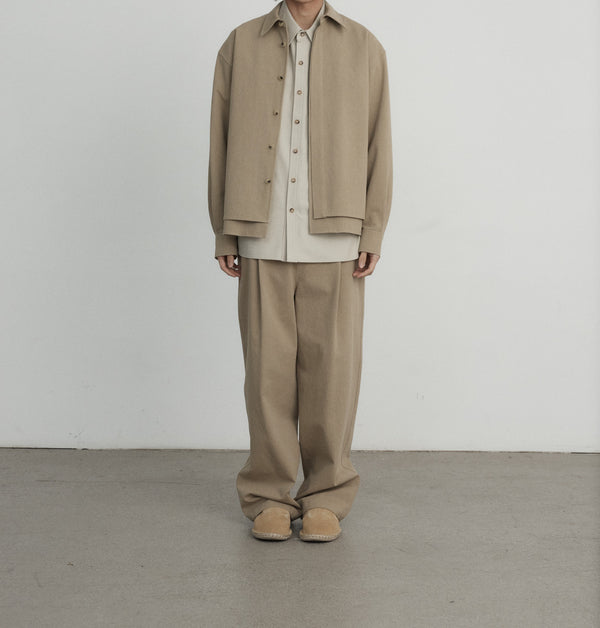
- The Korean shirt is all about clean lines: a crisp collar, a fluid, slightly oversized fit, matte fabric, and no decorative details.
- It stands apart from the Japanese shirt, which has its roots in workwear (indigo, exposed seams, rustic materials).
- The cut is similar for both women and men, making it the most natural unisex wardrobe on the market.
- Brands to know: LE17SEPTEMBRE, The Loom Atelier. Expect to pay between 70 and 600 euros, shipped from Paris.
The Korean shirt is probably the easiest piece to incorporate into a French wardrobe: it requires no styling effort, can be worn with what you already have, and transforms an outfit through its cut alone. You just need to know what sets it apart from its Japanese cousin and how to recognize a genuine Seoul designer piece. This guide answers both questions.
What characterizes a Korean shirt?
A Korean shirt is recognizable by its clean lines: a simple, crisp collar (mandarin or short shirt collar), discreet or concealed buttons, a straight, slightly loose fit, and a complete absence of decorative details. No patterns, no logos, no contrasting topstitching.
The fabric does the rest. Korean designers work with smooth, dense cottons, fluid linen-viscose blends, and matte materials that do not reflect light. The result is a piece that looks simple on a hanger and reveals itself when worn: this is the very essence of Seoul minimalism, where value lies in construction, not ornamentation.
Korean shirt or Japanese shirt: which should you choose?
The Korean shirt and the Japanese shirt share a loose fit but come from opposite worlds. Here is how we compare them in our shop:
| Criterion | Korean shirt | Japanese shirt |
|---|---|---|
| Origin | Contemporary Seoul minimalism | Workwear (noragi, workwear) |
| Colors | Light neutrals: ecru, white, grey, black | Indigo, navy, earth tones, ecru |
| Details | None, maximum clean lines | Exposed seams, patch pockets |
| Materials | Smooth cottons, fluid blends | Dense cottons, rustic linens, flannel |
| Effect | Clean, urban, discreet | Textured, patinated, artisanal |
Choose the Korean shirt if you are looking for an effortlessly versatile, polished piece. Choose the Japanese shirt if you like clothes that develop a patina and show their wear. Our Japanese guide details the latter world.
The Korean shirt for women: cuts and ways to wear it
The Korean shirt for women plays on a controlled looseness: slightly dropped shoulders, a straight bodice, and a length that stops at mid-hip. Three cuts dominate: the classic oversized shirt, the mandarin-collar blouse with no visible buttons, and the long shirt worn as an overshirt.
To wear it, keep one anchor point: tucked into high-waisted trousers, or worn open over a fitted top. As a monochrome outfit with matching trousers, it creates the most Seoul-inspired look. Our women's shirt section brings together these three cuts from recognizable brands.
The Korean shirt for men: which cut for which use?
The Korean shirt for men comes in two styles depending on the use. The straight shirt in smooth cotton with a simple collar is worn tucked in at the office and works as a more relaxed dress shirt. The loose, longer, and thicker overshirt is worn open over a t-shirt as a transitional piece.
The key when trying it on: the shoulder should fall slightly outside your actual shoulder, but the collar must remain crisp and close well at the nape of the neck. If the collar gaps or buckles, the shirt is poorly made. Our men's shirts cover both styles, in sizes designed for these loose cuts.
Where does the Korean shirt aesthetic come from?
The Korean shirt aesthetic draws from two sources. The first is traditional clothing: the hanbok with its fluid lines, crossed collars, and lack of restriction on the body. The second is the contemporary minimalism that became established in Seoul in the 2010s, in reaction to logo-saturated streetwear.
From this meeting is born a piece that looks like nothing and structures everything. Korean designers have taken this logic further than most European brands: at LE17SEPTEMBRE, launched in Seoul in 2013, a shirt is judged by the crispness of the collar and the neatness of the hem, not its details.
How to recognize a genuine Korean shirt?
A genuine Korean shirt can be verified by four points, the same as for any quality Asian piece:
- The brand is named on the product page. LE17SEPTEMBRE, The Loom Atelier, Low Classic: these names exist and can be verified.
- The composition is specified: cotton, linen, viscose, with percentages. "Soft fabric" means nothing.
- The price is consistent: between 70 and 600 euros for a designer piece. Below 30 euros, you are buying a generic factory shirt.
- The seller is transparent about their sourcing: where the pieces come from, where they are shipped from.
This checklist rules out almost all the shops that position themselves as "Korean shirts" in France today. That is precisely why we wrote it.
Our selection, shipped from Paris
At Wahallyu, every Korean shirt in our catalog comes from an identifiable label, with its composition displayed. Wahallyu was born from a trip to Korea and Japan: we discovered these brands on the ground, not in a wholesaler's catalog.
Prices range from 70 to 600 euros depending on the brand and material, and everything leaves Paris in 2 to 5 business days for mainland France. Have a question about a size or cut? Write to us, and we will respond with genuine advice.