


Updated November 23, 2026 · Reading time: 10 min · By the WaHallyu team, a Japanese and Korean fashion boutique in Paris
Korean menswear arrived in France through TV series, music, and social media. The image we have of it is often that of colorful streetwear covered in logos. The menswear of Seoul designers is almost the opposite: understated, structured, and attentive to proportions and materials. This guide reveals the true rules, the history behind them, the brands to know, and the pieces to get you started.
Key takeaways
- Korean menswear by Seoul designers is based on proportions, a neutral palette, and materials that drape well, not logos.
- The traditional Korean wardrobe has featured loose trousers and a long coat worn over them for centuries.
- The basic rule: play with only one volume at a time, either on top or on the bottom.
- Five pieces are enough to get started: a shirt, wide-leg trousers, a knit, a jacket or coat, and jeans.
- Two brands from our selection to know: LE17SEPTEMBRE, launched in Seoul in 2013, and Dunst, a contemporary brand from the LF group.
Heritage: loose trousers and the long coat
Traditional Korean clothing, the hanbok, dresses men in a crossed top (jeogori), loose trousers (baji), and a long coat (po). The best-known of these coats, the durumagi, is worn over the top to protect against the cold. Its name means “closed all around” [1].

Officers, meanwhile, wore a robe called a dallyeong, like this one, preserved at the Metropolitan Museum of Art in New York: dark silk, very wide sleeves, and a straight-falling line.

Loose trousers, layering, and the long silhouette of the coat are therefore not new in Korea. Seoul designers reinterpret them with contemporary cuts and materials.
The rules of Korean menswear
Four key features recur in the collections of Seoul designers:
- Only one volume at a time. A loose top with a more tailored bottom, or a top that fits closer to the body with wide trousers. Layering too many volumes drowns the silhouette.
- A neutral palette. Ecru, beige, gray, navy, black, with at most one accent color per outfit.
- Matte, soft materials. Wool, dense cotton, cashmere blends: the material creates the style.
- Slightly dropped shoulders. Cuts are often slightly loose, with the shoulder seam placed lower.
Korean style or “Asian streetwear”?
The Korean wave, hallyu, introduced the image of Korea before its clothing. The term appeared in 1999 in the Chinese press and refers to the spread of Korean culture, led by TV series and music, then fashion and beauty [4]. As a result, many online stores sell sweatshirts with Korean writing on them as “Korean style.”
The test is simple: if the product page does not name a brand and does not indicate the composition or origin, you are not buying Korean fashion, but an idea of Korea.
The brands to know
LE17SEPTEMBRE. Launched in Seoul in 2013, the brand offers structured silhouettes with unexpected details, designed and made in Korea [5]. Its menswear line is one of the most accurate in terms of relaxed tailoring: wool shirts, pleated trousers, textured knits.
-
 LE17SEPTEMBRE
Classic wool shirt - Charcoal grey
€319,99
-
 LE17SEPTEMBRE
Wool trousers - Beige
€299,99
-
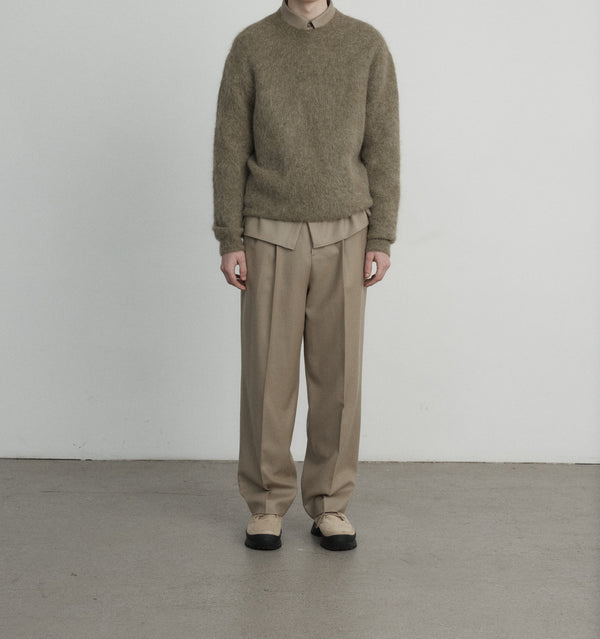 LE17SEPTEMBRE
Textured alpaca sweater - Light Khaki
€268,99


Dunst. A contemporary brand from the Korean group LF, distributed by more than 100 retailers in around thirty countries. It presented its first show at Seoul Fashion Week in September 2026 and has a flagship store in Seongsu, Seoul [6]. In our selection, several of its pieces are unisex, such as its striped shirts and wool and cashmere coats.
-
 Dunst
Unisex belted cashmere mac coat, black
€339,99
-
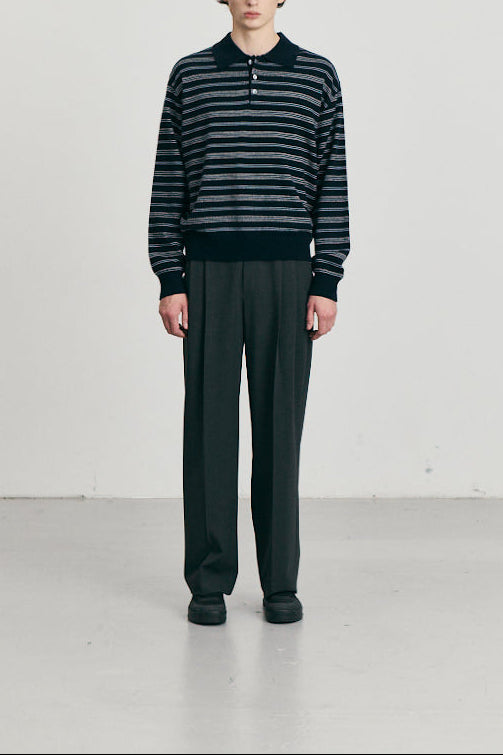 Dunst
Pleated semi-wide trousers, charcoal grey
€104,99
-
 Dunst
Relaxed curved wide jeans, washed grey
€129,99


The five basic pieces
| Piece | Its role | What to check |
|---|---|---|
| Loose shirt | Can be worn tucked in, untucked, or open over a T-shirt | The length and how the collar holds |
| Wide-leg pleated trousers | The piece that defines the silhouette | The waist, room in the hips, the length |
| Knit | Worn on its own or under a jacket | The thickness and feel |
| Jacket or coat | Provides the line and structure | The shoulder and length |
| Wide-leg jeans | The relaxed weekend base | The leg width and wash color |
With these five pieces in neutral tones, you get around ten outfits that work together. For sizing, rely on the measurements in centimeters on each product page: the cuts are often designed to be worn slightly loose.
-
 Dunst
Unisex informal shirt, light blue stripe
€104,99
-
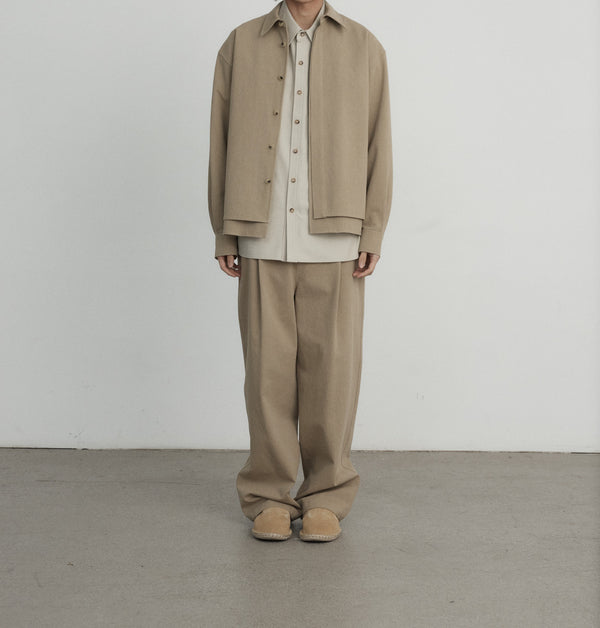 LE17SEPTEMBRE
Double layer cotton shirt - Beige
€319,99
-
 Dunst
Unisex collared wool blouson, charcoal grey
€279,99


Three everyday outfits
| Occasion | The outfit | Why it works |
|---|---|---|
| At the office | Tucked-in gray wool shirt, beige pleated trousers, long black coat | The volume is in the trousers and the coat, while the shirt remains neat |
| On the weekend | Open striped shirt over a white T-shirt, wide gray jeans | Two colors, only one loose piece on the bottom |
| In the evening | Textured knit, gray pleated trousers, short wool jacket | The short jacket balances loose bottoms |
The most common mistake: layering volumes thinking you are “doing Korean” (wide trousers, oversized sweatshirt, and loose jacket). Always keep one anchor point: a defined waist, a closer-fitting top, or a short jacket.
Korean menswear works on all body types, provided you place the volume correctly. For a strong silhouette: prefer cuts that fall straight rather than loose. For a petite frame: a short jacket and trousers of the right length will elongate the legs.
Frequently asked questions
What defines Korean menswear?
For Seoul designers: the work on proportions, a neutral palette, and quality materials, rather than patterns or logos.
Which Korean brands for men?
From our selection: LE17SEPTEMBRE, launched in Seoul in 2013, and Dunst, a contemporary brand from the LF group [5] [6].
Is Korean menswear streetwear?
Not for Seoul designers, whose collections are more minimalist and structured. “Asian streetwear” sold online without a brand often has nothing Korean about it.
What is a durumagi?
The traditional Korean long coat, worn over the top and trousers to protect against the cold. Its name means “closed all around” [1].
How do I choose my size for a Korean brand?
Compare the measurements in centimeters on the product page (chest width, length, waist circumference) with a garment you already wear.
To learn more: our guide to Korean clothing, the LE17SEPTEMBRE and Dunst pages, and the entire selection of Korean menswear.
Sources
- “Hanbok,” Wikipedia (English), sections on the jeogori, baji, and durumagi, accessed November 23, 2026. en.wikipedia.org
- “Genre Paintings,” Korea, 19th century, album of four sheets, The Metropolitan Museum of Art, n° 2026.343a–d, public domain. metmuseum.org
- “Dallyeong (Official's robe),” Korea, late 19th or early 20th century, The Metropolitan Museum of Art, n° 2024.301.32, public domain. metmuseum.org
- “Korean Wave,” Wikipedia (English), accessed November 23, 2026. en.wikipedia.org
- “About,” LE17SEPTEMBRE official website. le17septembre.com
- “Dunst names NMIXX's Sullyoon as global ambassador,” The Herald Business, October 23, 2026. biz.heraldcorp.com
Product photos: WaHallyu and the brands presented. Museum images: credits and licenses indicated under each image.


