Updated November 21, 2026 · Reading time: 9 min · By the WaHallyu team, a Japanese and Korean fashion boutique in Paris
The Japanese women's shirt captivates with an effortless elegance: a clean collar, controlled volume, and fabric that drapes beautifully. Yet it has nothing strictly traditional about it, as traditional Japanese clothing had neither buttons nor shirt collars. This guide tells how the shirt arrived in Japan, how great Japanese designers reinvented it, what makes it "Japanese" today, and how to wear it.
Key takeaways
- The shirt arrived in Japan with Western clothing, which was adopted by the state and the imperial court from 1872.
- From 1981, Rei Kawakubo (Comme des Garçons) and Yohji Yamamoto showed at Paris and introduced a different idea of the shirt: deconstructed, loose, and often borrowed from menswear.
- What makes it Japanese today: the cut (dropped shoulders, just-right volume), the collar (mandarin or soft collar), and the fabric, often a dense, matte cotton.
- Three silhouettes to know: the straight oversized, the structured fitted, and the shirt worn open like a light jacket.
- The style rule: a loose shirt calls for a neater bottom or a defined waist.
How the shirt arrived in Japan
The kimono closes by crossing and is held in place with a belt: it has neither buttons nor a turn-down collar. The shirt, as we know it, therefore arrived in Japan with Western clothing, yōfuku, during the Meiji era. On November 12, 1872, the government replaced the old court attire with a Western-style ceremonial costume, largely inspired by French models [1].
The women of the court followed a little later: on June 23, 1886, rules established the Western ceremonial outfits they were required to wear [2]. The print below, published the following year, shows court ladies sewing these new garments.

Today's Japanese shirt comes from this encounter: a Western piece cut with the Japanese taste for volume, fabric, and simplicity.
The Japanese designers who reinvented the shirt
A century after the Meiji era, Japanese designers in turn shook up the Western shirt, and it all happened in Paris.
Rei Kawakubo, Comme des Garçons. She founded the brand in Tokyo in 1969 and presented her first show in Paris in 1981 [7]. Black, asymmetrical cuts, exposed seams: the shirt became a field for experimentation, like this 2008 top preserved at the Rhode Island School of Design museum.

Yohji Yamamoto. He also showed in Paris in 1981. His first line, Y's, dressed women in pieces inspired by menswear, with stripped-down shapes and dark colors. In 1983, he summarized his idea to the New York Times: "When I started designing, I wanted to make men's clothes for women" [9]. The large white shirt worn loose comes partly from that.
Junya Watanabe. Trained at Comme des Garçons, he launched his own line in 1993 and presented his women's collections in Paris that same year [10]. His shirts play with draping, pleats, and prints, like this 2009 blouse.

Issey Miyake. With his Pleats Please line, launched in 1993, he offered clothing made of very fine polyester, permanently pleated and designed for freedom of movement [12]. Another way of thinking about women's tops: light, maintenance-free, and wrinkle-resistant.
Japanese houses to follow today
The next generation exists, and it also shows in Paris. Three names to know if you are looking for a designer Japanese shirt:
- Sacai, founded in Tokyo in 1999 by Chitose Abe. Its signature is hybridization: it combines knitwear and very fine fabrics in the same piece, and reworks patterns to achieve unexpected shapes [13].
- Mame Kurogouchi, a women's brand created in 2010 by Maiko Kurogouchi. It blends traditional craftsmanship with cutting-edge techniques in the service of contemporary femininity [14].
- Auralee, created in 2015 by Ryota Iwai. Everything starts with the fabric: yarns and fabrics selected in Japan and elsewhere, for simple pieces made to last [15].
Add Yohji Yamamoto, whose house was founded in 1972 and still shows in Paris, and Comme des Garçons, whose shirts remain a reference [16] [17].
What makes a Japanese shirt today
A shirt does not become Japanese because it features a wave print. It is Japanese because of its construction. Four key features:
- The cut. Slightly dropped shoulders, a straight or darted volume, and a length designed to be worn untucked or tucked in.
- The collar. A soft shirt collar without stays, or a mandarin collar: a short, straight collar without a fold-down collar. Its Western name comes from the officials, the "mandarins," of Qing China, who wore it in their uniforms [4].
- The fabric. Japan has a true tradition of shirt cottons. Around Nishiwaki, in Hyōgo Prefecture, cotton has been grown since the early 18th century, and weaving developed there after 1792. Banshu-ori, a cotton woven with yarns dyed before weaving, is still produced there, and its name has been protected since 2008 [5].
- The finishes. Hidden button placket, clean seams, a discreet or absent pocket. Japanese style removes more than it adds.
The three silhouettes to know
1. The straight oversized
Dropped shoulders, a loose body, and a rounded hem. This is the easiest shirt to wear: it can be worn untucked over jeans, half-tucked into wide-leg trousers, or open over a t-shirt.
2. The structured fitted
The waist is shaped by darts or curved seams. It replaces a light jacket and creates a more dressed-up look, especially when buttoned all the way up.
3. The shirt worn open
In a slightly dense fabric, the shirt becomes a layer in its own right, worn open like a jacket. It is an ideal transitional piece.
Which shirt for which silhouette?
| Your silhouette | Recommended shirt | The detail that matters |
|---|---|---|
| Petite | Fitted, or a short oversized worn tucked in | The length should not cut off the leg |
| Tall | Long oversized, worn open or untucked | The volume complements the stature |
| Generous bust | Open collar, soft cotton, not too fitted | The buttons should not pull: take the next size up if necessary |
| Waist you want to define | Structured fitted | The darts do the work of a belt |
| Slim | All, including very loose volumes | The volume builds the silhouette |
A tip for trying it on: on a dropped-shoulder cut, the shoulder seam intentionally falls lower, but it must fall at the same place on both sides and the collar must remain clean. A wavy collar indicates a poorly cut shirt, regardless of the brand.
How to wear it every day
The rule is the same as for wide-leg trousers: if the shirt is loose, keep a point of structure elsewhere. Three outfits that work:
- At the office: shirt tucked into high-waisted trousers, sleeves slightly rolled up. This is the combination we detail in our guide to Japanese women's trousers.
- On the weekend: oversized untucked over straight jeans, with slim sneakers.
- In transitional weather: shirt open over a t-shirt or fine knitwear, like a light jacket.
In terms of colors, ecru, off-white, khaki, sky blue, and fine stripes pair with the entire Japanese wardrobe. For an effortlessly polished look, try tone-on-tone: shirt and trousers in the same color family.
-
 N.HOOLYWOOD
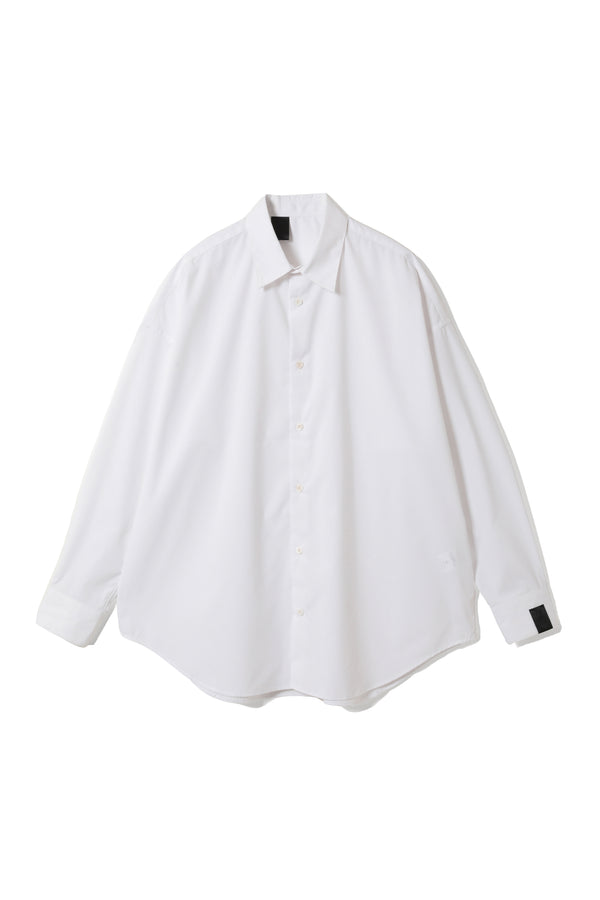
Oversized dress shirt - White
€239,99
-
 N.HOOLYWOOD
Oversized button-down shirt - Yellow
€299,99
-
 N.HOOLYWOOD
Big Mac work shirt - Black
€229,99
-
 Blue Blue Japan
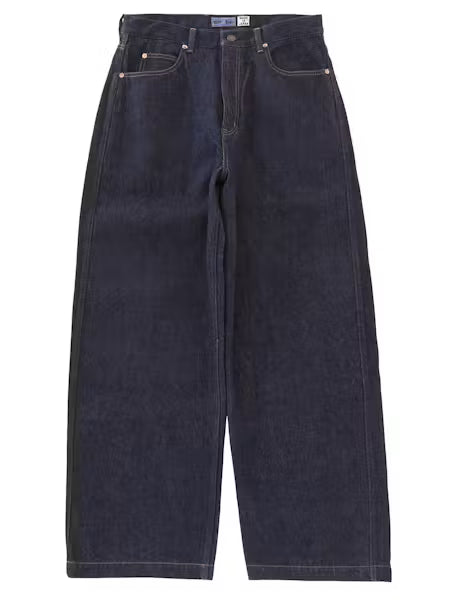
Unisex double weave sashiko jeans - Indigo
€379,99


Read the label before buying
For a shirt, the fabric does almost everything: collar support, drape, comfort, aging. In the European Union, the fiber composition must appear on the label, in percentages, and must be visible before purchase, including online [6]. A product page that does not indicate the fabric is therefore incomplete.
The term "100%" is also regulated: it is reserved for products composed of a single fiber [6].
Where to find a Japanese shirt
The houses mentioned above are found in their boutiques and on their official websites. At WaHallyu, we select Japanese brands that manufacture in Japan. The oversized shirts from N.HOOLYWOOD (the white and yellow ones are made in Japan, the black work shirt in China) are cut for men but look great on women, in the spirit of Yohji Yamamoto: wide, tucked into high-waisted trousers or worn open. For the bottom, the double-weave sashiko jeans from Blue Blue Japan, in cotton made in Japan, are unisex.
Everything is shipped from Paris within 24 to 48 hours, with free delivery in France from €70. See the full selection of Japanese women's clothing.
Frequently asked questions
Is there a traditional Japanese shirt?
Not in the strict sense: traditional Japanese clothing, such as the kimono, closes by crossing, without buttons or shirt collars. The shirt arrived with Western clothing during the Meiji era, from 1872 [1].
Which Japanese designers have made their mark on the women's shirt?
Rei Kawakubo (Comme des Garçons) and Yohji Yamamoto, who showed in Paris from 1981, then Junya Watanabe and Issey Miyake with his Pleats Please line launched in 1993. Today, Sacai, Mame Kurogouchi, and Auralee are the names to follow [7] [9] [10] [12] [13].
What is a mandarin collar?
A short, straight collar without a fold-down collar. Its Western name comes from the officials of Qing China, who wore it in their uniforms [4].
Should you take your usual size for an oversized shirt?
Yes, generally: the cut is intentionally loose. Take the size down only if you want a more discreet volume, and check the width and length measurements on the product page.
What trousers should you wear with a loose shirt?
High-waisted trousers, straight or wide, with the shirt tucked in or half-tucked. If the trousers are very loose, prefer a shirt that is closer to the body or fitted.
What is Japanese shirt cotton?
Japan produces cottons renowned for shirts, such as banshu-ori from the Nishiwaki region, a cotton woven with yarns dyed before weaving [5].
Sources
- "The establishment of taireifuku", National Diet Library, exhibition on France and Japan. ndl.go.jp
- "Court uniform and dress in the Empire of Japan", Wikipedia (English), accessed November 21, 2026. en.wikipedia.org
- Yōshū (Hashimoto) Chikanobu, "Court Ladies Sewing Western Clothing (Jokan yōfuku saihō no zu)", 1887, The Metropolitan Museum of Art, gift of Lincoln Kirstein, 1959, public domain. metmuseum.org
- "Mandarin collar", Wikipedia (English), accessed November 21, 2026. en.wikipedia.org
- "Banshu-ori Fabrics: Inheriting Traditional Techniques and Bringing them into the Modern World", Pen Magazine International. pen-online.com
- Regulation (EU) No 1007/2011 on textile fibre designations and labelling, Articles 7 and 16, EUR-Lex. eur-lex.europa.eu
- "Comme des Garçons", Wikipedia (English), accessed November 21, 2026. en.wikipedia.org
- Rei Kawakubo for Comme des Garçons, "Woman's Shirt", 2008, RISD Museum (Rhode Island School of Design Museum of Art), photo CC0. risdmuseum.org
- "Yohji Yamamoto", Wikipedia (English), citing a 1983 interview with the New York Times, accessed November 21, 2026. en.wikipedia.org
- "Junya Watanabe", Wikipedia (English), accessed November 21, 2026. en.wikipedia.org
- Junya Watanabe for Comme des Garçons, "Woman's Blouse", 2009, RISD Museum, photo CC0. risdmuseum.org
- "Issey Miyake", Wikipedia (English), accessed November 21, 2026. en.wikipedia.org
- "Sacai", house profile, Fédération de la Haute Couture et de la Mode (FHCM). fhcm.paris
- "Mame Kurogouchi", house profile, FHCM. fhcm.paris
- "Auralee", house profile, FHCM. fhcm.paris
- "Yohji Yamamoto", house profile, FHCM. fhcm.paris
- "Comme des Garçons", house profile, FHCM. fhcm.paris
Product photos: WaHallyu and the brands presented. Archive and museum images: credits and licenses indicated under each image.