Updated November 23, 2026 · Reading time: 10 min · By the WaHallyu team, a Japanese and Korean fashion boutique in Paris
Searching for a Japanese clothing brand often leads to lists of prestigious names, without explaining what sets them apart or where to buy them. This guide takes a different approach: it tells how Japanese fashion established itself worldwide, introduces the major brand families and names to know, and then presents the two Japanese houses we have chosen, and why.
Key takeaways
- Japanese fashion established itself internationally starting in the 1960s and 1970s, with Hanae Mori and Issey Miyake, then in 1981 with Comme des Garçons and Yohji Yamamoto in Paris.
- In Japan itself, American style (the VAN Jacket brand) and jeans (made in Kojima since 1965) shaped menswear.
- Japanese brands can be grouped into three families: those focused on materials and dyeing, those focused on archives, and those focused on cut.
- New names to follow: Sacai, Mame Kurogouchi, Auralee.
- At WaHallyu: Blue Blue Japan (indigo, made in Japan) and N.HOOLYWOOD (military and workwear archives).
The pioneers: when Japanese fashion conquered the world
Hanae Mori. She presented her first collection in New York in 1965, titled "East Meets West". Twelve years later, she opened a couture salon in Paris and became the first Asian woman to be admitted as an official couture house in 1977 [1].
Issey Miyake. Graduating from Tokyo University of the Arts in 1964, he founded the Miyake Design Studio in Tokyo in 1970. In the late 1980s, he developed a permanent pleating technique, applied to the already cut and sewn garment, which gave birth to his Pleats Please line [2]. This 1984 dress, dyed in indigo using the batik technique, shows his taste for materials and simple shapes.

Comme des Garçons and Yohji Yamamoto. Rei Kawakubo founded Comme des Garçons in Tokyo in 1969. In 1981, she and Yohji Yamamoto showed in Paris and shook up Western fashion: black, asymmetry, unexpected volumes [4] [5]. Trained at Comme des Garçons, Junya Watanabe has presented his own collections in Paris since 1993 [6].
In Japan: American style and jeans
Meanwhile, in Japan, another story was being written. Founded in Osaka by Kensuke Ishizu, the VAN Jacket brand introduced American style starting in the 1950s, then the "Ivy" style of East Coast universities in the 1960s. In 1965, its team published Take Ivy, a photo book taken on American campuses, which became a reference for an entire generation [7].
Jeans followed the same path. In 1965, the Maruo company, in Kojima, Okayama Prefecture, sewed jeans with imported denim. It launched its Big John brand in 1967. In the early 1970s, Kurabo and Kaihara manufacturers produced Japanese denim, and since the 1990s Japanese denim has been renowned worldwide [8].
This dual heritage, avant-garde designers on one side and the passion for American classics on the other, explains the richness of Japanese fashion today.
The three families of Japanese brands
To help you navigate, a simple grid: look at where the brand's expertise comes from.
| Family | What matters | Examples |
|---|---|---|
| Material and dyeing | Fabric, color, how the piece ages. The cut often remains simple | Blue Blue Japan, Auralee |
| Archive | Existing garments (military, workwear, vintage) studied and redesigned | N.HOOLYWOOD |
| Cut and concept | Line, volume, experimentation | Comme des Garçons, Yohji Yamamoto, Issey Miyake, Sacai |
A 200-euro shirt will have nothing comparable depending on the family it comes from. Knowing which one you are dealing with avoids many disappointments.
Names to follow today
- Sacai, founded in Tokyo in 1999 by Chitose Abe. Its signature is hybridization: it combines knitwear and very fine fabrics in the same piece, and reworks patterns to achieve unexpected shapes [9].
- Mame Kurogouchi, a women's brand created in 2010 by Maiko Kurogouchi, which blends traditional craftsmanship and cutting-edge techniques [10].
- Auralee, created in 2015 by Ryota Iwai. Everything starts with the material: yarns and fabrics selected in Japan and elsewhere [11].
These houses show in Paris and are sold in their boutiques and on their official websites.
Our two Japanese houses
We have chosen a few houses rather than a broad catalog, and only two on the Japanese side. Each represents a family.
Blue Blue Japan, material. Born in 1996 in the Okura boutique in the Daikanyama neighborhood, in Tokyo, the brand reinterprets traditional Japanese techniques. Its pieces, made with natural indigo and hand-dyed blue, are designed to become more expressive over time. It belongs to Seilin & Co., a company founded in Daikanyama in 1975 [12].
-
 Blue Blue Japan
Double weave sashiko oriental jacket - Indigo
€595,99
-
 Blue Blue Japan
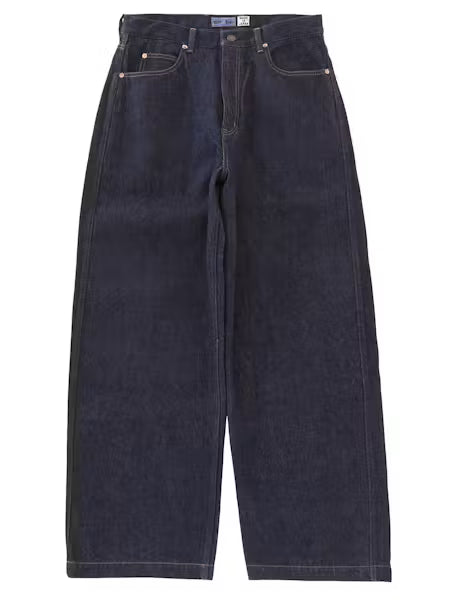
Unisex double weave sashiko jeans - Indigo
€379,99
-
 Blue Blue Japan
Double cloth sashiko trousers - Black
€419,99


N.HOOLYWOOD, archive. Daisuke Obana worked in vintage clothing boutiques since high school, became a buyer in Harajuku, then started in 1999 altering vintage pieces. He founded N.HOOLYWOOD in 2001 and has presented his collections in New York since 2010. The brand even has a line dedicated to military clothing [13].
-
 N.HOOLYWOOD
Hooded balmacaan coat - Khaki
€669,99
-
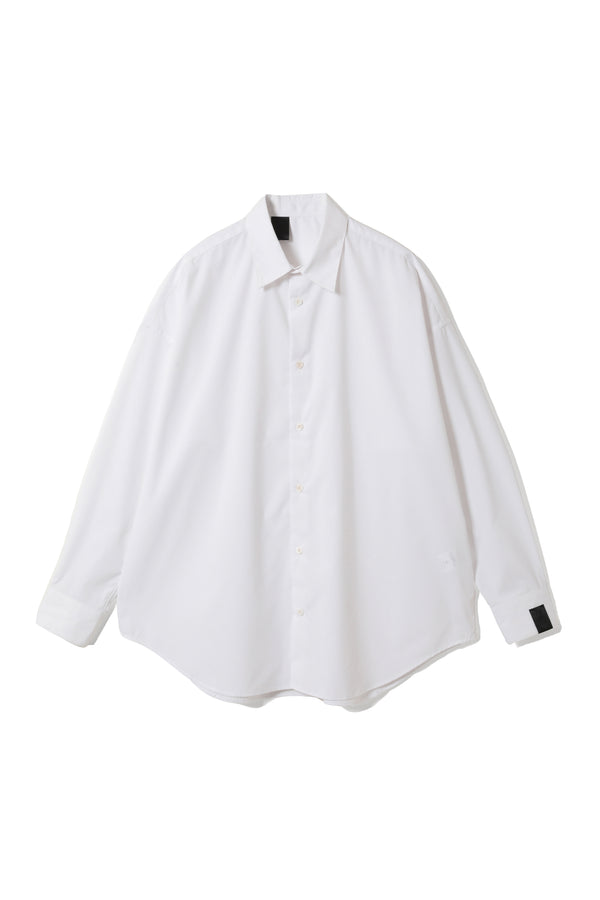 N.HOOLYWOOD
Oversized dress shirt - White
€239,99
-
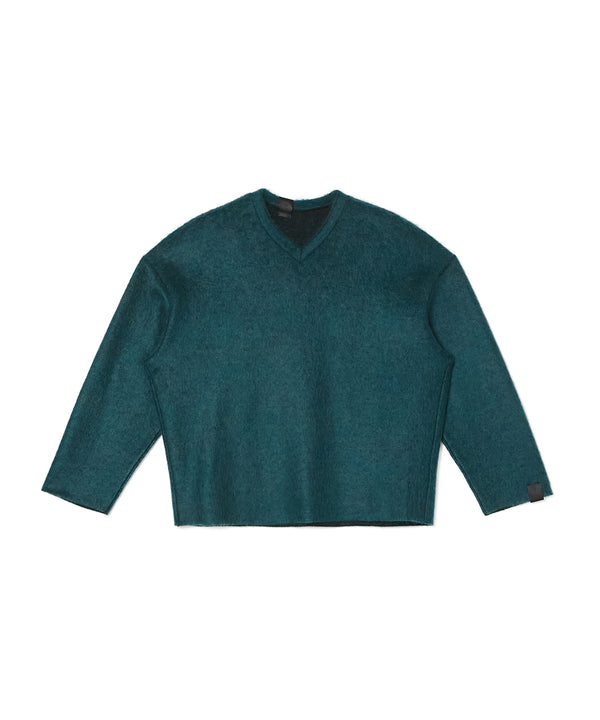 N.HOOLYWOOD
Reversible V-neck knit - Green
€369,99

Recognizing a true Japanese brand
Online, many boutiques sell "Japanese style" without any Japanese brand. Three checks are enough:
- The brand is named on the product page, and you can find its official website.
- The composition is indicated, as required by law before purchase in the European Union [14].
- The origin is clear: the seller states where the piece comes from. A Japanese brand does not necessarily make everything in Japan: at N.HOOLYWOOD, for example, some pieces in our selection are made in Japan, others in China, and we indicate it on each page.
Frequently asked questions
What are the best-known Japanese clothing brands?
Among the designers: Comme des Garçons, Yohji Yamamoto, Issey Miyake, Junya Watanabe, Sacai. Among the younger brands: Mame Kurogouchi and Auralee [2] [4] [5] [9].
When did Japanese designers arrive in Paris?
Hanae Mori opened a couture salon in Paris in the 1970s and entered official haute couture in 1977. Comme des Garçons and Yohji Yamamoto showed in Paris in 1981 [1] [4] [5].
Where to buy Japanese brand clothing in France?
In the brand boutiques and at retailers who indicate the brand, composition, and origin. At WaHallyu, we offer Blue Blue Japan and N.HOOLYWOOD, shipped from Paris.
Why are Japanese brands expensive?
The price comes mainly from the material, dyeing, and small-batch production. A well-made piece lasts for years and, for indigo, becomes more beautiful over time.
To go further: our guides to the Japanese men's shirt, the Japanese men's jacket and Japanese indigo, and the selection of Japanese men's clothing.
Sources
- "Hanae Mori", Wikipedia (English), accessed November 23, 2026. en.wikipedia.org
- "Issey Miyake", Wikipedia (English), accessed November 23, 2026. en.wikipedia.org
- "Issey Miyake, Summer 1984 - Indigo Batik Dress", RISD Museum, CC0 license, Wikimedia Commons. commons.wikimedia.org
- "Comme des Garçons", Wikipedia (English), accessed November 23, 2026. en.wikipedia.org
- "Yohji Yamamoto", house profile, Fédération de la Haute Couture et de la Mode (FHCM). fhcm.paris
- "Junya Watanabe", Wikipedia (English), accessed November 23, 2026. en.wikipedia.org
- "Van Jacket", Wikipedia (English), accessed November 23, 2026. en.wikipedia.org
- "Japanese denim", Wikipedia (English), accessed November 23, 2026. en.wikipedia.org
- "Sacai", house profile, FHCM. fhcm.paris
- "Mame Kurogouchi", house profile, FHCM. fhcm.paris
- "Auralee", house profile, FHCM. fhcm.paris
- "About Us", Seilin & Co. official website. seilin.net
- "About", N.HOOLYWOOD official website. n-hoolywood.com
- Regulation (EU) No 1007/2011 on textile fibre names and labelling, Articles 7 and 16, EUR-Lex. eur-lex.europa.eu
Product photos: WaHallyu and the brands presented. Museum images: credits and licenses indicated under each image.